


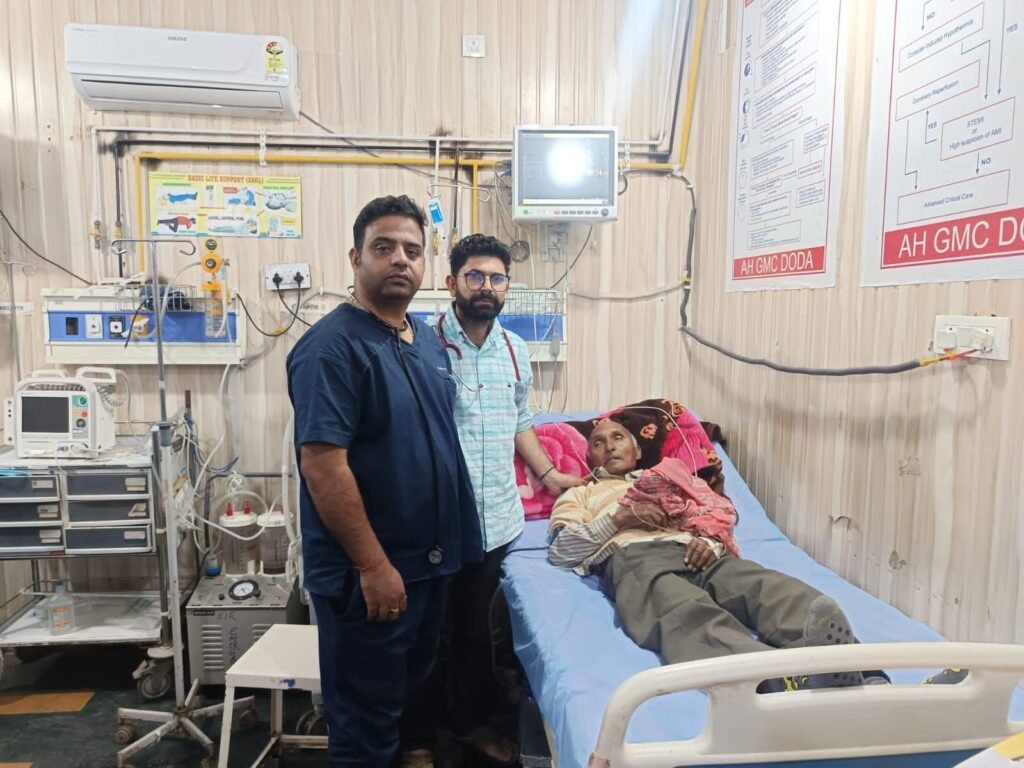
Doda, Nov 2: In a significant advancement for healthcare in the Chenab Valley, the Government Medical College (GMC) Doda has executed its inaugural thrombolysis procedure on a stroke patient. This groundbreaking event heralds a new era for emergency medical services in the region.
The procedure, a crucial and timely treatment for strokes, took place under the leadership of Principal Dr. Rakesh Bahl and Head of the Medicine Department Dr. Amir Hussain Parray. This marks a pivotal moment as patients in the area can now receive advanced care locally.
The patient, Roshan Lal, a resident of Dolli village in Gundna tehsil, arrived at GMC Doda displaying classic stroke symptoms. The medical team, led by Dr. Govinder Kumar (MD Medicine), along with Dr. Divyanshu (Resident Doctor) and Dr. Momin (Intern), swiftly evaluated and treated him. Support from Mr. Rajinder Singh, Mr. Arif Mir, and dedicated nursing staff proved essential during the process.
Doctors report that the patient has responded positively to the thrombolytic therapy and is on the path to recovery. Previously, stroke patients in Doda had to be referred to GMC Jammu or other hospitals, often at the cost of critical time. With this successful thrombolysis treatment at GMC Doda, patients can now access essential stroke management within the district.
Dr. Bahl expressed his satisfaction, stating, “This is a landmark achievement for GMC Doda and a reassurance for countless individuals in remote areas who can now receive vital treatment without delay.”
In agreement, Dr. Parray remarked, “This success showcases our team’s evolving skills and dedicated approach to emergency medicine. This isn’t just a medical feat — it symbolizes hope for the entire Chenab region.”
This event has garnered widespread acclaim from the local community, as it signifies a substantial advancement in rural healthcare infrastructure and the capacity to save lives within the first critical hour following stroke onset. Such initiatives play a crucial role in ensuring that individuals receive timely and effective treatment, improving outcomes and enhancing the quality of care accessible to residents in the region.